 blog
Candid Wedding Photography Examples 2026: Real Moments That Last
Last Updated: November 14, 2026
Quick Summary
Candid wedding photography documents a wedding day without directing or staging people, so images show real reactions as they happen. Couples marrying across County Clare increasingly expect this documentary approach rather than posed line-ups. The strongest candid frames cluster around predictable moments, so you can plan your timeline to give them room.
- Documentary photography is pure observation, while candid allows a light touch such as moving you into better light.
- The drinks reception is the richest twenty minutes of the day for candid guest frames and the easiest to lose.
- A candid frame has three cues: nobody looking at the camera, mid-action people, and context in the frame.
- Give a couple a task rather than a pose so movement and conversation give the camera something real to catch.
- Agree at booking whether children may be photographed, portfolio use, and how the gallery is shared with guests.
Table of Contents
- Why Candid Wedding Photography Still Leads in 2026
- Candid Wedding Photo Ideas by Moment
- Documentary Wedding Photography Examples That Show the Difference
- How to Feel Comfortable in Wedding Photos
- Wedding Photographer Consultation Questions to Ask
- Candid Coverage for Every Couple, Culture and Ability
- Book Your Date and See the Full Gallery
- Frequently Asked Questions
Why Candid Wedding Photography Still Leads in 2026
Candid wedding photography documents a wedding day without directing or staging people, so images show real reactions as they happen.
Couples have spent a decade looking at posed line-ups that could have been taken at any wedding anywhere. They want proof of their day, not a template.
A stiff set of group shots takes twenty minutes out of your drinks reception and gives little back.
Below, we break down what candid coverage looks like moment by moment, and how to brief a photographer so you get it. For the finished result, browse our portfolio photos of real wedding days.
Candid, Documentary or Editorial: Telling Them Apart
Documentary wedding photography is pure observation: the photographer works quietly, follows the day, and does not intervene. Candid photography sits inside that but allows a light touch, such as a quiet word to move you into better light. Editorial style is the opposite, with directed poses and magazine-style images.
Most couples want a mix, weighted heavily toward documentary. The mistake is booking an editorial photographer and expecting candid, or the reverse. Ask to see a full gallery, not a highlight reel, and count how many frames look genuinely unposed.
Candid Wedding Photo Ideas by Moment
The strongest candid work clusters around a handful of predictable moments, so you can plan your timeline to give those moments room. Below is how we break the day down, with the kind of frame each stage tends to produce and the timing that makes it possible.
Morning Preparations and the Messy Details
Preparations are where the day is most unguarded, and where the best detail shots live.
Keep this window unhurried. See the kind of frame we mean in this candid prep moment.
- The dress on the hanger, shot against window light
- Hands fastening a bracelet or buttonhole
- A bridesmaid's reaction to the first look in the mirror
- The kitchen table with cups, pins and scattered lists
Build a buffer into the morning and tell your photographer which room has the best light.
Watch out: if the photographer is only booked from the ceremony onwards, the entire prep sequence, and the calmest, most natural frames of the day, is gone.
Ceremony, First Look and Golden Hour
Ceremony moments are the least repeatable part of the day, so coverage has to be positioned, not improvised.
The first look, at the church door or before the ceremony, produces the single most honest expression of the day.
What separates a documentary frame from a posed one here is where the photographer stands and how long they wait. See the bride and dad on their way into the church for a real candid example.
Drinks Reception and Guest Interactions
The drinks reception is the richest twenty minutes of the day for candid guest frames, and the easiest to lose. Guests are relaxed, greeting each other, and the couple is moving between groups.
Give the photographer a short list of guests who matter, grandparents, godparents, the friend who travelled furthest, then let them work. Naming people is more useful than naming shots.
Speeches and the Emotional Room
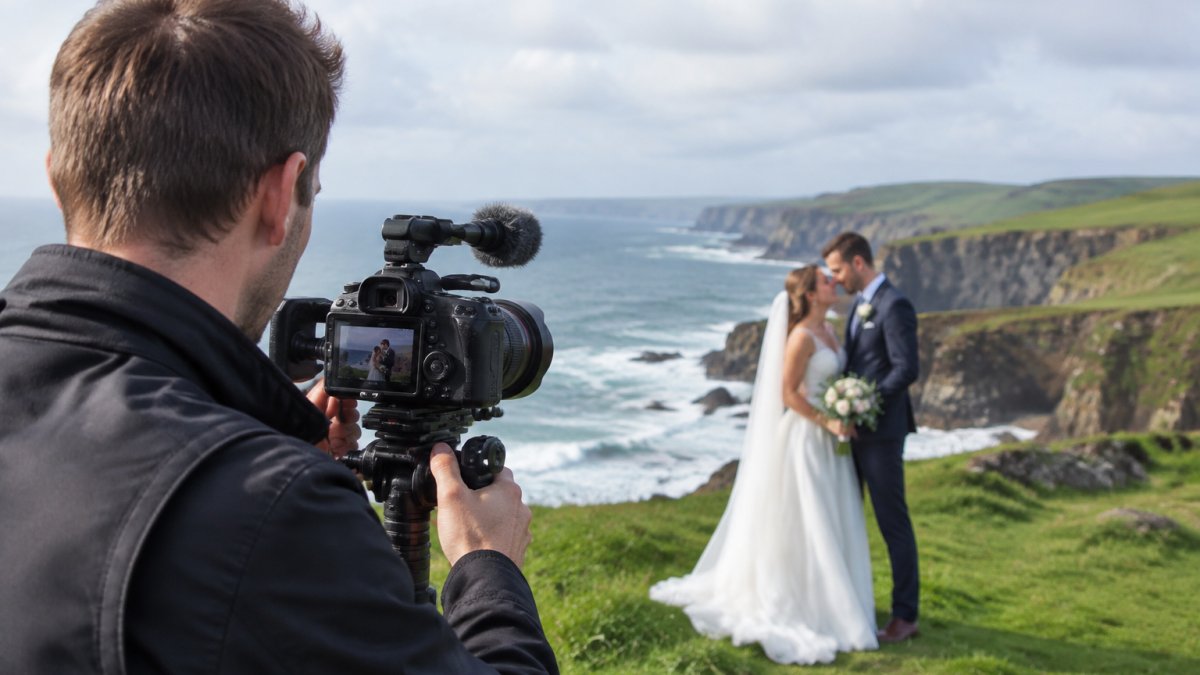
Speeches produce the frames couples cry over later: the speaker's hands, the reaction in the room, the couple's faces while someone else is talking. A photographer positioned to the side of the top table, with a clear line to the couple's faces and the speaker, will catch both.
Watch out: if the speeches are scheduled after the band starts or in a room with the lights down, the candid reaction frames become much harder to get.
Dancing, Late Night and the Unscripted End
The last two hours are where the least guarded photographs happen, the first dance, the children asleep under a table, the grandparents leaving, the friend who takes over the microphone. Coverage here is a booking decision, not a creative one. If your photographer leaves after the meal, you lose the part of the day that most resembles a documentary.
Decide which you value more, candid depth or cost, before you book.
Documentary Wedding Photography Examples That Show the Difference
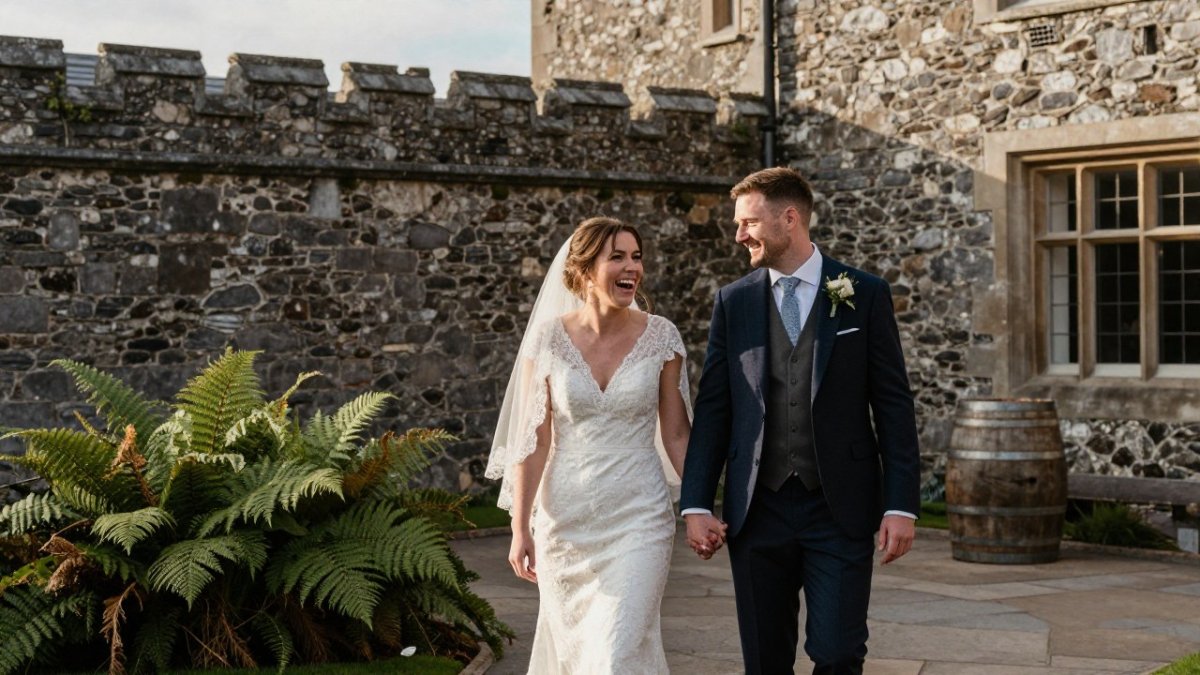
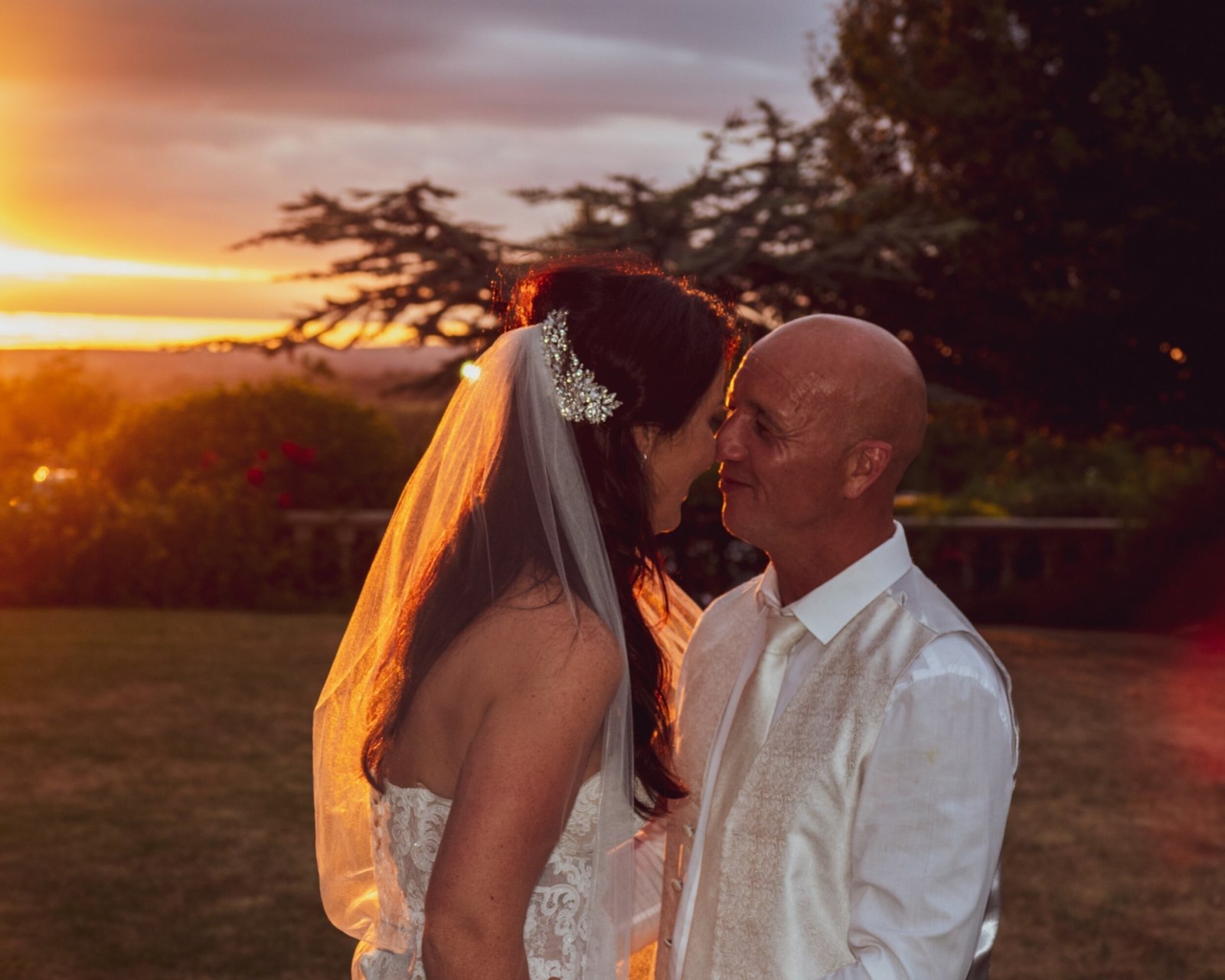
The clearest way to understand documentary coverage is to see a couple who asked for it and got it.
That is the whole method. No prompting, no "look at each other and laugh". You can read the story behind that relaxed lakeside portrait.
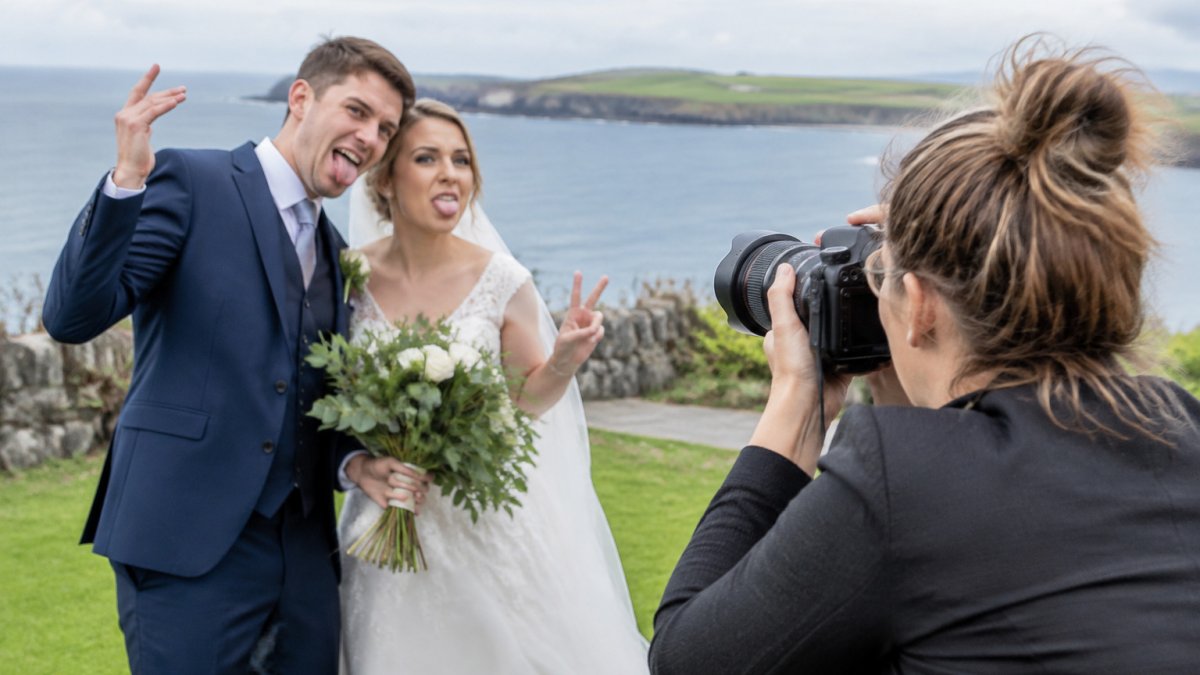
The difference shows up in the small things. In a posed frame, everyone is looking at the camera.
How to Feel Comfortable in Wedding Photos
Feeling comfortable in wedding photos comes down to trust in the photographer, something to do with your hands, and enough time that you forget the camera is there.
Booking a photographer you have never spoken to properly and hoping rapport appears on the morning does not work. Meet them, or have a proper video call, and say plainly that you are nervous.
The Difference Between Candid and Posed, in Practice
Most couples say they want candid photographs, but what they actually want is a mix: a short, organised set of family and couple portraits, and the rest of the day documented without direction.
A candid or documentary frame has three visual cues: nobody is looking at the camera, the people are mid-action or mid-conversation, and the frame has context, a room, a guest, a detail, rather than a clean backdrop. A posed or editorial frame is the reverse: eye contact, a held expression, a composed background.
When you look at a photographer's gallery, count how many frames pass the three-cue test. A gallery that is mostly eye-contact portraits is an editorial photographer, whatever the website says.
Giving the Camera Something Real to Catch
The nerves disappear fastest when we give a couple a task rather than a pose. Walk towards us. Fix his collar. Tell her the thing you said on your first date.
A task occupies the part of your brain that would otherwise be managing your expression. That is why the best couple portraits often look like a conversation someone photographed, rather than a pose someone held.
If you are shy, tell your photographer.
Practical Comfort for the Day Itself
A few concrete habits make a measurable difference. Wear shoes you can walk in, because the best couple frames usually involve walking. Keep a small bag with a spare pair of flats and a touch-up kit.
Watch out: if you plan a long golden-hour portrait session in a location twenty minutes from the venue, you will spend the best light in the car.
Consent, Privacy and Guest Photographs
Candid coverage raises questions posed coverage does not. Guests will take their own photographs, some will post them before you have seen them, and some will not want to be photographed at all. Decide early what you want.
Agree three things with your photographer at booking: whether children may be photographed, whether images may be used in the photographer's portfolio or on social media, and how the gallery is shared with guests. Put the answers in the contract.
Some couples use a shared gallery link or guest-photo app so images are collected in one place.
Wedding Photographer Consultation Questions to Ask
The questions below are worth asking before you book.
| Question | Why it matters | What a good answer sounds like |
|---|---|---|
| Can I see a full gallery? | Shows the real standard, not the best 30 frames | A complete wedding, start to finish |
| How much of the day is directed? | Tells you if the style matches what you want | Clear split, usually mostly observational |
| Have you shot our venue and church? | Light and layout change everything | Specific knowledge of the space |
| What is the backup plan if you are ill? | Protects a day you cannot repeat | A named contingency, explained calmly |
| Who owns the images and how are they delivered? | Affects printing, sharing and family | Plain terms, in writing |
| How do you handle group photos? | The biggest time sink of the day | A short, organised list and a time limit |
Ask about image delivery and usage rights in the same conversation, and get the answers in writing.
Candid Coverage for Every Couple, Culture and Ability
Couples come with different family structures, ceremonies and traditions. Some want the religious ritual documented closely. Some are blending two families and want the room's reaction to the toast.
At consultation, it helps to tell your photographer who must be photographed, which moments cannot be missed, and anything to avoid.
Watch out: if you do not name the people who matter, no photographer can guess.
Book Your Date and See the Full Gallery
The best candid coverage starts with a conversation about your day, your venue and the moments you care about most.
With 36 years of experience, the team brings deep local knowledge of County Clare venues and churches.
Dates fill early, particularly through the summer. Check availability for your date and we will talk through coverage, timelines and what a relaxed, unposed record of your day actually looks like.
Your wedding day will not happen twice, and the moments worth keeping are the ones nobody arranged.
Frequently Asked Questions
What are examples of candid wedding photography?
Candid wedding photography captures unscripted moments: a father wiping a tear during the ceremony, guests laughing during speeches, a couple stealing a quiet glance during the reception, or children playing on the dance floor. Other examples include the nervous energy during morning preparations, a first look reaction, and the natural interactions between guests at golden hour. These images tell the story of the day as it actually happened, without direction or posing.
How do you get natural-looking wedding photos without staging moments?
The key is to choose a photographer who works in a documentary style and gives minimal direction. On the day, focus on your guests and your partner rather than the camera. A relaxed timeline with buffer time helps, as does a photographer who has scouted the venue and knows how to use natural light. When you are genuinely engaged in conversation or an activity, the resulting photos look natural because they are natural.
What is the difference between candid and documentary wedding photography?
Candid photography often refers to unposed, spontaneous images of people, while documentary wedding photography is a broader approach that records the entire day as a narrative, including details, atmosphere and sequences of events. In practice, a documentary photographer will capture candid moments as part of a complete story. Many photographers use a candid, unposed style within a documentary framework to create a coherent visual narrative.
How can couples feel more comfortable in front of the camera?
Feeling comfortable starts with a conversation before the wedding. Meet your photographer, share any anxieties and ask how they handle shy couples. On the day, trust that your photographer will guide you only when needed. Simple actions like walking together, whispering a joke or focusing on each other rather than the lens can ease nerves. A relaxed, experienced photographer will help you forget the camera is there.