 Ultimate guide
Wedding Videography Styles for Clare Venues: A Guide
Last Updated: November 5, 2026
Quick Summary
Wedding videography styles for Clare venues should be matched to the setting: cinematic films suit castle and hotel weddings, documentary coverage suits church and rural ceremonies, and coastal settings call for documentary with cinematic portraits and a flexible, weather-ready plan. Most couples we film want a blend of both approaches.
- Documentary videography films the day as it unfolds with minimal direction, capturing real reactions rather than staged ones.
- Cinematic wedding films are story-led pieces built from planned shots, careful lighting and a deliberate edit.
- Large castle and hotel rooms echo, so we place microphones carefully during speeches instead of relying on camera audio.
- We scout smaller rural churches beforehand to find where the light falls and confirm filming limits with the priest.
- Ask any videographer for the running times of every deliverable before you book, as a wedding film can mean three minutes or ninety.
Table of Contents
- Why Clare Venues Demand a Thoughtful Approach to Wedding Videography Styles
- Documentary Wedding Videography: Capturing Candid Moments Without Direction
- Cinematic Wedding Films: Story-Led Footage with a Polished Finish
- Matching Videography Styles to Clare Venue Types
- Wedding Video Highlight Film Length: What to Expect from Each Style
- Deliverables and Package Choices: Standard, Bespoke and Dual Coverage
- Budget and Pricing Guidance for Wedding Videography in Clare
- Wedding Videographer Questions to Ask Before You Book
- Seasonal and Weather Planning for Clare Weddings
- Book Your Date with a Local Clare Wedding Videographer
- Frequently Asked Questions
Why Clare Venues Demand a Thoughtful Approach to Wedding Videography Styles
Wedding videography styles for Clare venues are not a one-size decision. A candlelit castle ballroom, a small rural church and a clifftop ceremony each reward a different way of filming, and the wrong match shows up in the final film. At Philip Nevin Wedding Video & Photography, we have filmed weddings across County Clare for 36 years, so we know how much the building and the weather shape what ends up on screen.
That is the argument running through this guide: match the style to the venue, not the other way round. Below, we break down documentary and cinematic approaches, compare which suits castle, church and coastal settings, and cover highlight film lengths, packages, budget questions and what to ask before you book.
Documentary Wedding Videography: Capturing Candid Moments Without Direction
Documentary wedding videography is the practice of filming the day as it unfolds, with minimal direction, so the film records real reactions rather than staged ones. The camera stays close enough to catch a father's face during the speeches but far enough that nobody performs for it.
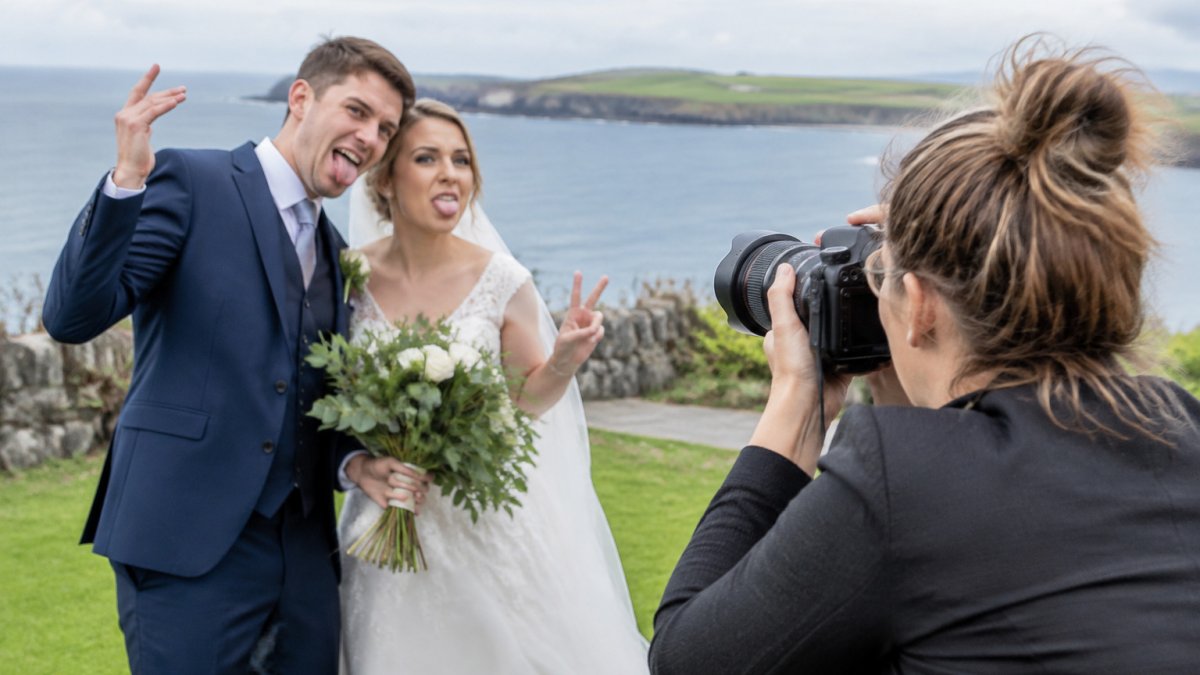
This is the style most couples mean when they ask for candid moments. It suits nervous couples particularly well, because there is nothing to learn and no blocking to remember. You get ready, you walk down the aisle, you greet your guests, and we film what happens. The trade-off is control: a documentary film reflects the day you actually had, so if the schedule runs late, that appears in the edit too. Unlike a styled shoot, it cannot be reshot. If this unposed approach is what you are drawn to, you can see how our candid wedding photography and video approach looks in practice.
Cinematic Wedding Films: Story-Led Footage with a Polished Finish
Cinematic wedding films are story-led pieces built from planned shots, careful lighting and a deliberate edit, producing something closer to a short film than a recording. They typically include a handful of short directed moments, usually during couple portraits, where we guide you into good light and let you settle rather than pose stiffly.
The distinction that matters is not quality, it is intent. Documentary asks what happened; cinematic asks how the day felt. A cinematic edit might run your ceremony audio under slow footage of the cliffs, or cut the first dance against the morning's quiet preparations. Most couples we film want a blend: documentary coverage through the ceremony and reception, with twenty minutes of cinematic portraits in the middle. A common mistake is booking a heavily directed style when you actually want to spend the day with your guests.
Matching Videography Styles to Clare Venue Types
The venue decides more about your film than most couples expect: the light, the space for the camera, the sound and the route between ceremony and reception all shape what is possible. Here is how the main styles map onto the settings we film most often, with the practical considerations that actually change the footage.
Castle and Hotel Weddings
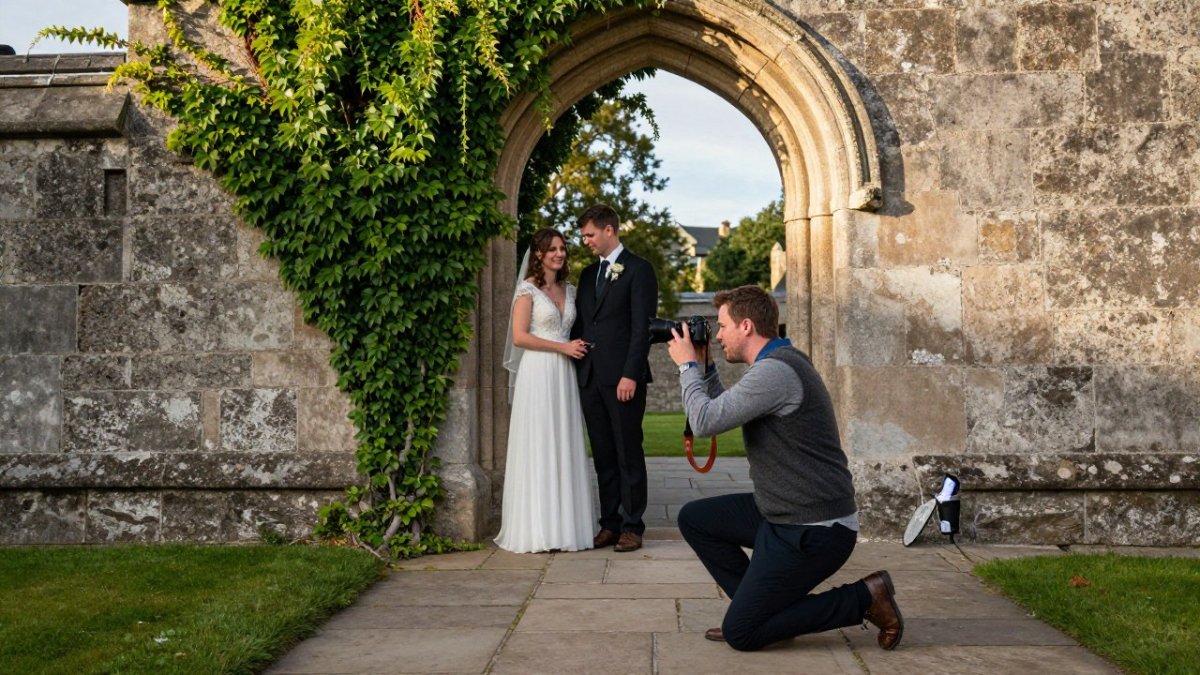
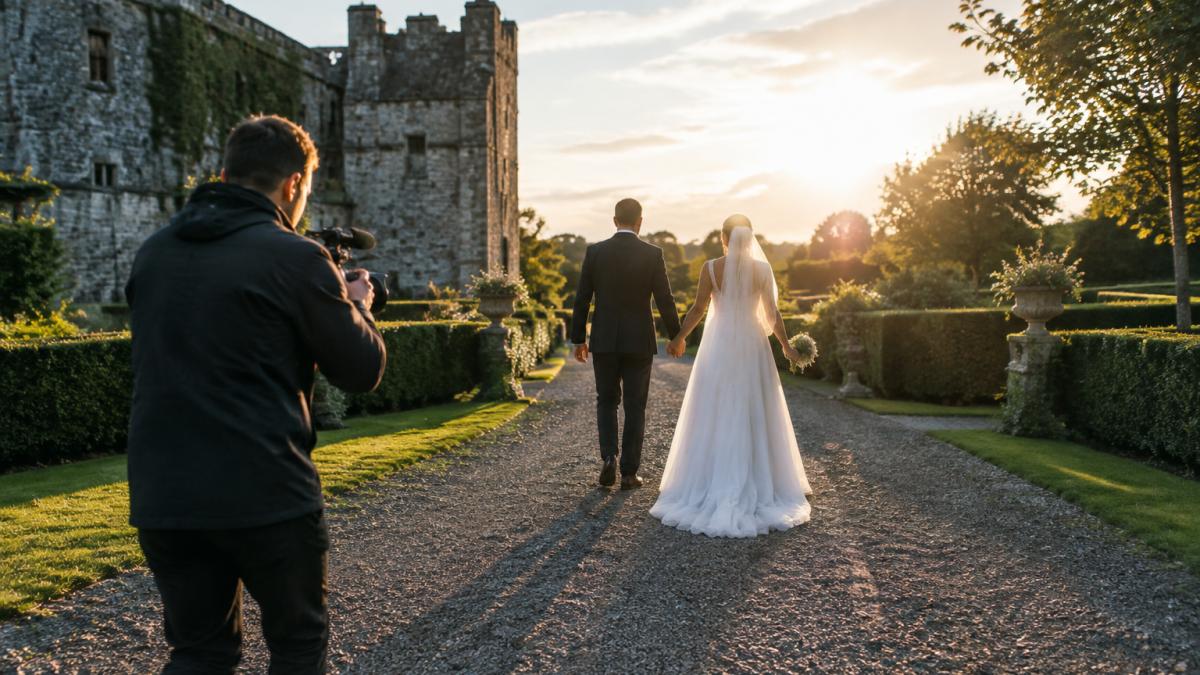
Castle and hotel weddings reward the cinematic style. Grand rooms give space for wide, steady shots, and the architecture holds up in low light, which is where polished films are won. The practical consideration is sound: large rooms echo, so we place microphones carefully during speeches rather than relying on the camera's own audio. If you are still choosing a setting, you can browse wedding venues in Co Clare to picture your own day, and a real wedding at the Falls Hotel in Ennistymon shows how a venue-led day is captured from start to finish.
Church Weddings and Smaller Rural Ceremonies
Church weddings and smaller rural ceremonies suit documentary coverage. A church service has its own rhythm and fixed positions, and a discreet camera that knows where to stand captures it without intruding on the ceremony. Smaller churches outside the main villages are where local knowledge earns its keep: we scout the building beforehand, find where the light falls and confirm with the priest what is permitted. Couples often assume a videographer will be a distraction in a small church. In practice, one camera in the right spot is barely noticed.
If your ceremony is in a small church, ask whether the videographer has filmed there before and what they did about the light and the priest's preferences.
Coastal and Outdoor Settings
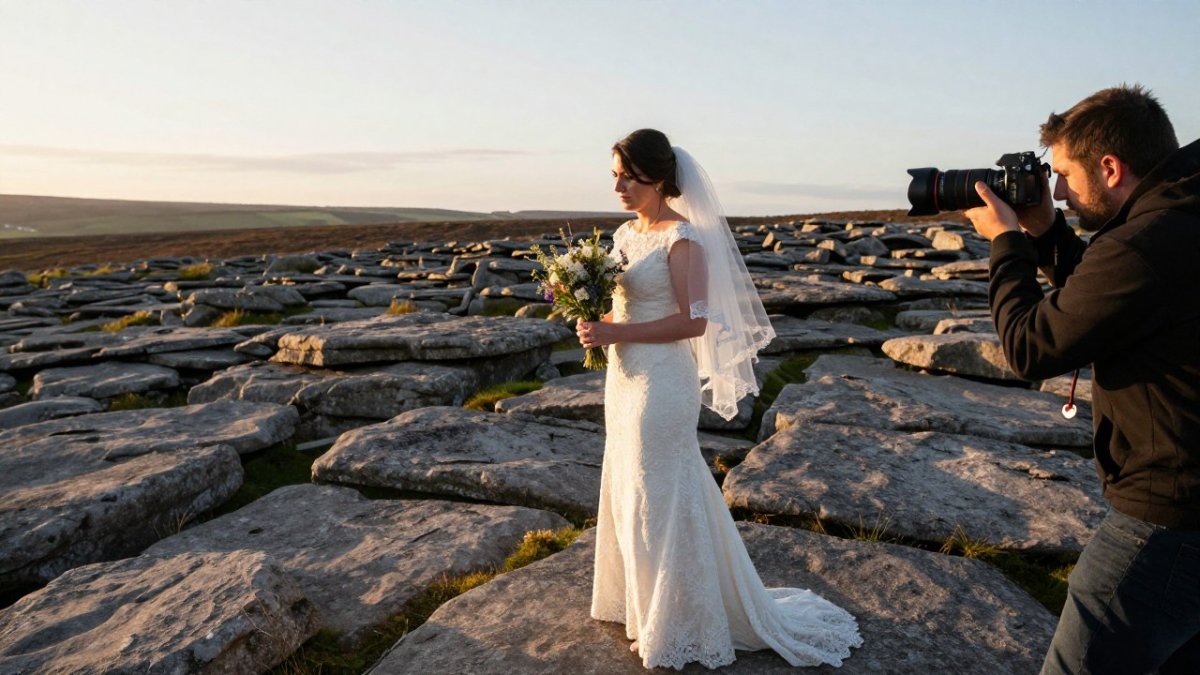
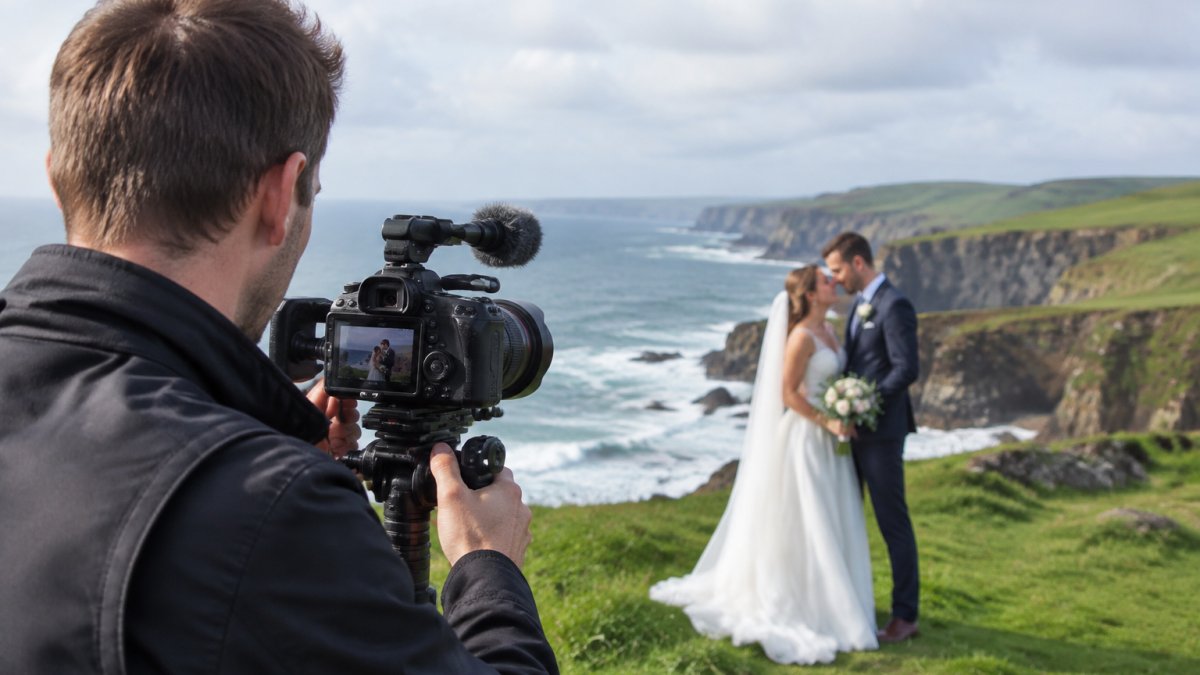
Coastal and outdoor settings call for flexibility above all. The Cliffs of Moher and the Atlantic coast give you rugged scenery and dramatic light, but wind is the constant variable, and it decides what audio and camera work is realistic on the day. We plan an indoor fallback for every outdoor element and treat the weather as a filming condition rather than a problem. Microphone windshields, carefully chosen positions and a willingness to move are what make coastal footage work.
Wind at exposed coastal sites is not a gentle breeze, and weather is a real filming condition to plan around.
| Venue Type | Best-Fit Style | Key Filming Consideration |
|---|---|---|
| Castle and hotel | Cinematic, with documentary coverage | Echo in large rooms; plan microphone placement and low-light exposure |
| Church and rural ceremony | Documentary | Fixed positions; confirm access and filming limits with the priest |
| Coastal and outdoor | Documentary with cinematic portraits | Wind and rain; stabilised rigs, wind protection and an indoor fallback |
Watch out: a videographer who quotes for a coastal ceremony without asking about wind, access and a wet-weather plan is planning to improvise on your day.
Wedding Video Highlight Film Length: What to Expect from Each Style
Wedding video highlight film length varies by style, and running times should be confirmed for each package before booking. The highlight film is the piece you will actually rewatch and share, so it carries the style: a cinematic highlight leans on music and atmosphere, while a documentary highlight leans on speech and reaction.
Think of the deliverables as a set rather than a single film. Ask any videographer what the running times are before you book, because "a wedding film" can mean three minutes or ninety.
Deliverables and Package Choices: Standard, Bespoke and Dual Coverage
Packages generally fall into three shapes: a standard package covering the core day, a bespoke package built around your schedule and venue, and dual coverage where photography and video are handled by one coordinated team. The right choice depends on how much of the day you want recorded and whether you want one point of contact.
Dual coverage is the option worth understanding properly. When photography and video are booked separately, the two suppliers usually coordinate, but they are still two businesses with their own priorities, and they can end up competing for the same moments. One team means one plan for the day, shared knowledge of the venue and no jostling during the first dance. It also means the person directing your portraits is not surprised by where the camera is standing.
- Standard package: ceremony, speeches and key moments, one highlight film
- Bespoke package: built around your venue, schedule and the parts of the day you care about
- Dual coverage: photography and video from one coordinated team, one timeline, one point of contact
Budget and Pricing Guidance for Wedding Videography in Clare
Pricing depends on coverage hours, the number of deliverables, the date and whether photography is included, so please contact us for a quote for your date and venue. What we can tell you is how to compare quotes properly, and which factors move the price most.
The biggest cost driver is coverage time. A ceremony-and-speeches booking of five or six hours is a different job from full-day coverage that starts with preparations and runs through the first dance, and the difference shows up in the edit as well as the filming. The second driver is deliverables: a single highlight film is one edit, while a package that adds a longer feature edit, the full ceremony, the speeches and a short teaser for social media is several. The third is people: one videographer working alone is cheaper than a two-person team, but a second camera is what lets you have a wide shot and a close-up of the same moment, and it is what covers a room when the schedule overlaps. Season and date matter too, because peak summer Saturdays carry more demand than a Friday in November.
Ask each supplier what is included rather than what it costs first. A lower quote often covers fewer hours, a shorter edit or a single camera, which makes the two prices incomparable. Ask for the running times of every deliverable, the number of people filming, and whether travel to your venue is included. Then compare. For current pricing and a quote for your date, get in touch to discuss your wedding photography and videography needs.
A useful way to compare is to price the same brief with each supplier: the same coverage hours, the same deliverables and the same venue. When the brief is identical, the differences in the quotes tell you something real about experience, equipment and the edit. When the briefs differ, the headline figure tells you almost nothing. Watch out: a quote that is dramatically lower than the rest usually reflects a shorter edit, a single camera or fewer hours, not a bargain, and it is worth asking exactly what has been left out.
Wedding Videographer Questions to Ask Before You Book
The right questions separate a supplier who will fit your day from one who will not. Ask these before you pay a deposit:
- Can I see a full film, not just a highlight reel?
- Who will actually film on the day, and how many people?
- Have you filmed at my venue before, and what did you learn there?
- How do you handle shy couples who dislike being filmed?
- What is the backup plan if you are ill or equipment fails?
- What are the running times of every deliverable?
- How long until the final films are ready?
- What is the payment schedule and cancellation policy?
Two of these matter more than the rest. Ask for a full film, because highlight reels hide weak coverage. And ask about backup: a professional should have a clear answer about illness and equipment failure, not a vague reassurance. If you are weighing up a lower-priced quote against a more experienced local supplier, the honest comparison is full films, backup plans and venue knowledge, not the headline figure.
Seasonal and Weather Planning for Clare Weddings
Weather planning is not pessimism in this county; it is basic preparation. Atlantic weather changes quickly, and the difference between a calm summer evening and a wet afternoon decides whether your portraits happen outdoors or under cover.
Build slack into the schedule. If your ceremony and reception are in different locations, allow more travel time than the map suggests, and keep an indoor option for every outdoor element. Winter weddings get dark early, which is not a problem if the plan accounts for it: we use the available light deliberately rather than fighting it. The couples who end up happiest with their film are the ones who treated the schedule as a guide and gave us room to work.
Book Your Date with a Local Clare Wedding Videographer
Choosing a style is the easy part. Finding someone who knows your venue, films it the way you want and turns up prepared is the real decision, and it is one worth making early, because good dates go first.
At Philip Nevin Wedding Video & Photography, we bring 36 years of filming across County Clare, dual coverage with dedicated photography and videography, and deep local knowledge of the county's hotels, venues and churches. We film candid, unposed moments, so your film reflects the day you actually had. One couple put it simply: having both video and photography handled by one local team was the best decision they made. Get started with Philip Nevin Wedding Video & Photography and check availability for your wedding date.
Frequently Asked Questions
What are the main styles of wedding videography?
The two main styles are documentary and cinematic. Documentary wedding videography follows the day as it happens, capturing candid moments and real sound with minimal direction. Cinematic wedding films are more story-led, using planned shots, music and colour grading to create a polished short film. Many videographers blend both, filming discreetly for most of the day and setting up a few short scenes for the highlight film.
What is the difference between cinematic and documentary wedding videography?
Documentary wedding videography prioritises real moments, natural audio and unobtrusive filming, so the final film feels like a record of the day as it unfolded. Cinematic wedding films are more produced: the videographer may suggest a walk, a doorway shot or a golden-hour sequence, then edit to music with colour grading. Neither is better; the right choice depends on whether you want a faithful record or a stylised short film.
How do I choose a wedding videography style that suits my venue?
Start with the venue's character. Castles and hotels often suit a cinematic approach because there is space for wide establishing shots and controlled lighting. Churches and smaller rural ceremonies usually work best with documentary coverage, where the videographer stays discreet and does not interrupt the service. Coastal and outdoor settings benefit from a mix, with natural filming for the ceremony and a short cinematic sequence at golden hour.
How long should a wedding highlight film be?
Highlight film length depends on the package and style chosen. Ask your videographer what length is included in each package before you book.
What should I ask a wedding videographer before booking?
Ask about their filming style and request full films, not just trailers. Confirm how many videographers will attend, what backup equipment they carry, and what happens if they are ill on the day. Ask about highlight film length, whether full speeches and ceremony are included, and how long delivery takes. Finally, check their knowledge of your venue and church, and whether they have filmed there before.
Can a videographer capture a wedding without making it feel staged?
Yes. A documentary-led approach means the videographer films from a distance, uses long lenses and avoids interrupting. Couples often say they forgot the camera was there. Short directed moments, such as a walk together at sunset, can be offered but should never be forced. Ask to see full wedding films rather than highlight reels to judge how natural the couples look.