 How-to
How Do You Prepare for Wedding Photos on the Day?
Last Updated: October 30, 2026
Quick Summary
Prepare for wedding photos by choosing a bright getting-ready room with a large window, clearing clutter before your photographer arrives, and keeping hair and makeup beside the largest window. Protect the time with a loose schedule that includes buffers, and decide in advance what gets cut if the day slips.
- Ask the venue to remove bags, suitcases and spare chairs before the photographer arrives.
- Keep rings, earrings, perfume, the invitation suite and the veil on one details table.
- Build in a 15-minute buffer before the ceremony and another before dinner.
- Decide the cut order in advance: extra couple portraits first, never immediate-family groupings.
- Name one person as timeline keeper to watch the clock and flag spent buffers.
Table of Contents
- Getting-Ready Wedding Photos: Set the Room and the Schedule
- Your Wedding Photography Timeline: Build in Buffers
- A Wedding Photography Checklist for Details and People
- Natural Wedding Poses: How to Look Relaxed in Photos
- Plan a Contingency for Weather, Delays and Low Light
- Brief Your Photographer and Book Your Date
- Frequently Asked Questions
Getting-Ready Wedding Photos: Set the Room and the Schedule
Couples who prepare the room get calm, natural photos.
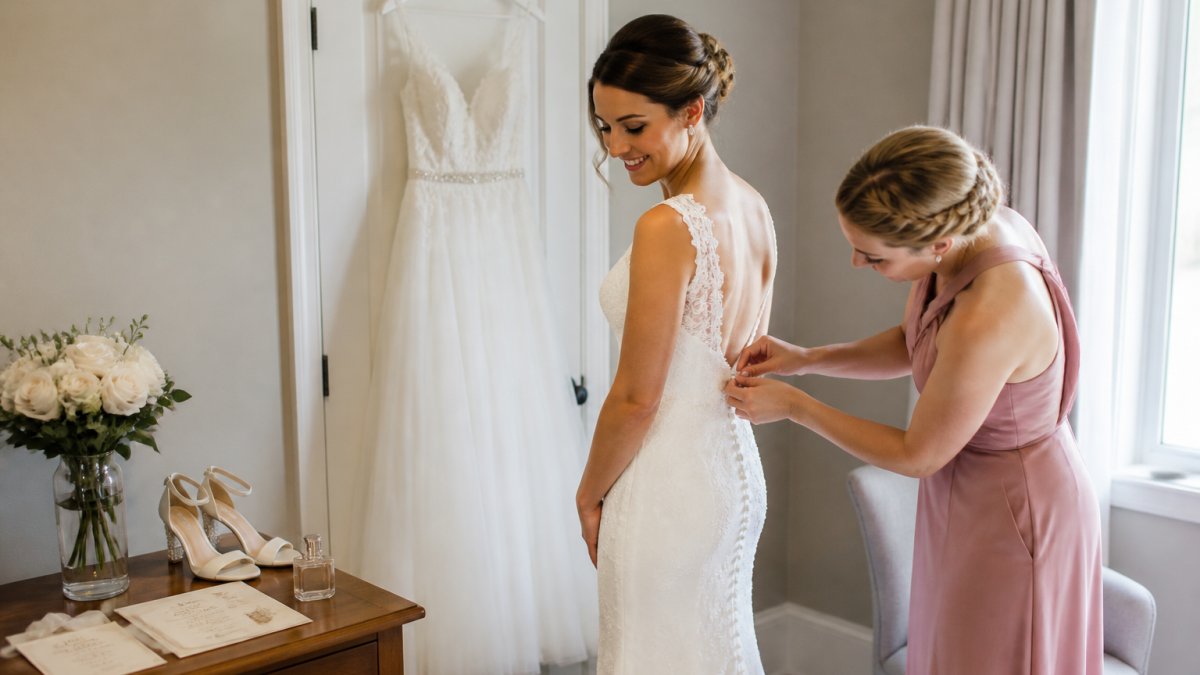
So how do you prepare for wedding photos on your wedding day?
Clear the space before we arrive. Ask the venue to remove bags, suitcases and spare chairs.
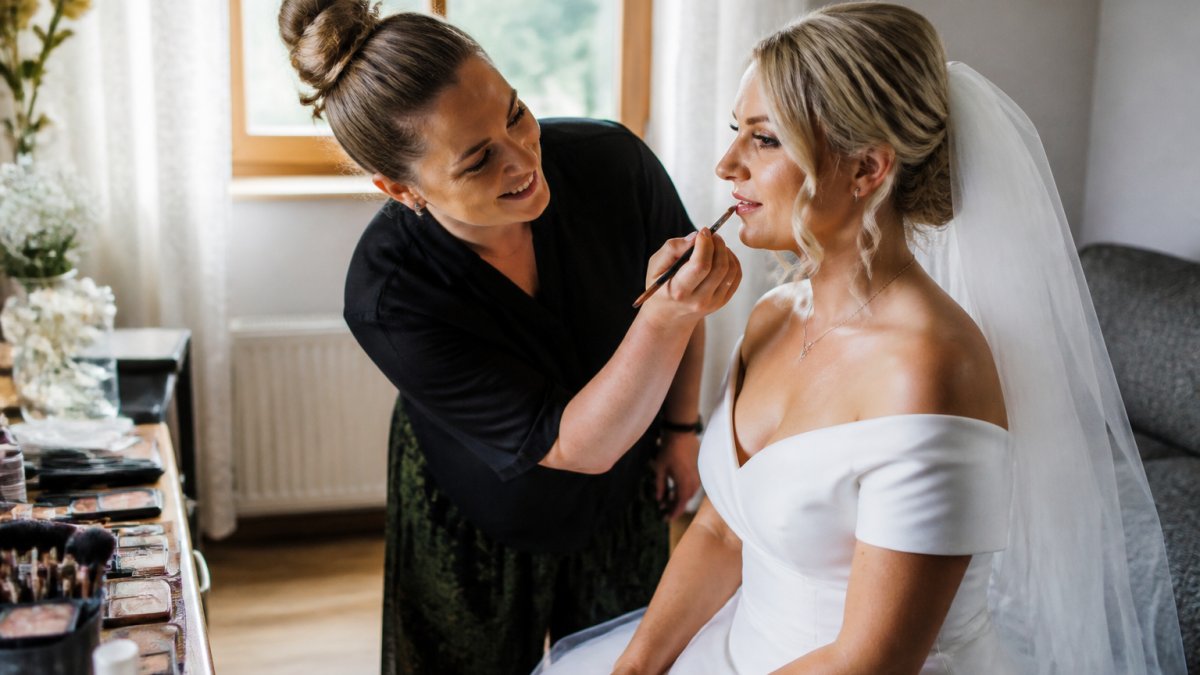
Claim the window. Hair and makeup should work beside the largest window, never under ceiling lights.
Set a loose schedule. Leave room for the getting-ready coverage and add a buffer. For hairstyling ideas for weddings, brides, bridesmaids, see our portfolio.
A common mistake is booking hair and makeup back-to-back with no gap.
Your Wedding Photography Timeline: Build in Buffers
A wedding photography timeline is a written plan that maps each part of the day to a time slot, with spare minutes built in.
Most timelines fail for one reason. They assume everything runs on time. It never does.
Here is a simple structure that works, with realistic coverage windows:
- Getting ready: 60 to 90 minutes of coverage
- Portraits of the couple: 20 to 30 minutes
- Family and wedding-party portraits: 20 to 30 minutes
- Bride and groom portraits at golden hour: 15 to 20 minutes
Add a 15-minute buffer before the ceremony and another before dinner. Those two buffers rescue more wedding days than any other planning step.
An Hour-by-Hour Preparation Checklist
A checklist with owners and deadlines helps most. Below is a version couples can work from once the date is booked. Times are illustrative, shift them to your ceremony time, but keep the order and the gaps.
| When | Task | Owner |
|---|---|---|
| 6 months out | Confirm ceremony time and venue access time with the celebrant and venue | Couple |
| 3 months out | Agree the getting-ready room and confirm its window light | Couple + venue |
| 6 weeks out | Send the one-page shot list and family groupings | Couple |
| 2 weeks out | Share the draft timeline with venue, hair and makeup, and celebrant | Couple |
| 1 week out | Pack the details box (rings, invitation suite, keepsakes) | Couple |
| Night before | Charge phones, lay out attire, confirm transport times | Couple + wedding party |
| Morning of | Clear the getting-ready room before the photographer arrives | Venue or a named helper |
| Morning of | Keep hair and makeup beside the largest window | Hair and makeup team |
| 30 minutes before ceremony | Hand the rings and vows to the named helper | Best man or maid of honour |
Name one person, a sibling, a friend, a planner, as the timeline keeper. Their only job is to watch the clock and tell you when a buffer is being spent.
When the Day Slips
Decide in advance what gets cut, in this order: extra couple portraits first, then wedding-party groupings, then extended family combinations. Never cut the immediate-family groupings, those are the hardest to recreate and the most likely to be regretted.
Share the timeline with your venue, your hair and makeup team and your celebrant. Everyone working from one page keeps the day moving, and it means the photographer is not the only person defending the schedule.
A Wedding Photography Checklist for Details and People
A wedding photography checklist is a short, written list of the shots that matter most to you, grouped by details, people and moments.
Keep it to one page. Long lists slow the day down and pull us away from candid moments.
Details to gather in one place:
- Engagement ring and both wedding bands
- Bouquet and buttonholes
- Wedding dress, shoes and veil
People to name for formal portraits:
- Immediate family, listed by name
- Grandparents, with a note on mobility
- The wedding party
Moments to prioritise: a first look, a grandparent greeting, a specific family tradition.
Citizens Information's guide to getting married is worth reading before you finalise the day, since legal requirements shape the ceremony timing.
Natural Wedding Poses: How to Look Relaxed in Photos
Natural wedding poses are not poses at all.
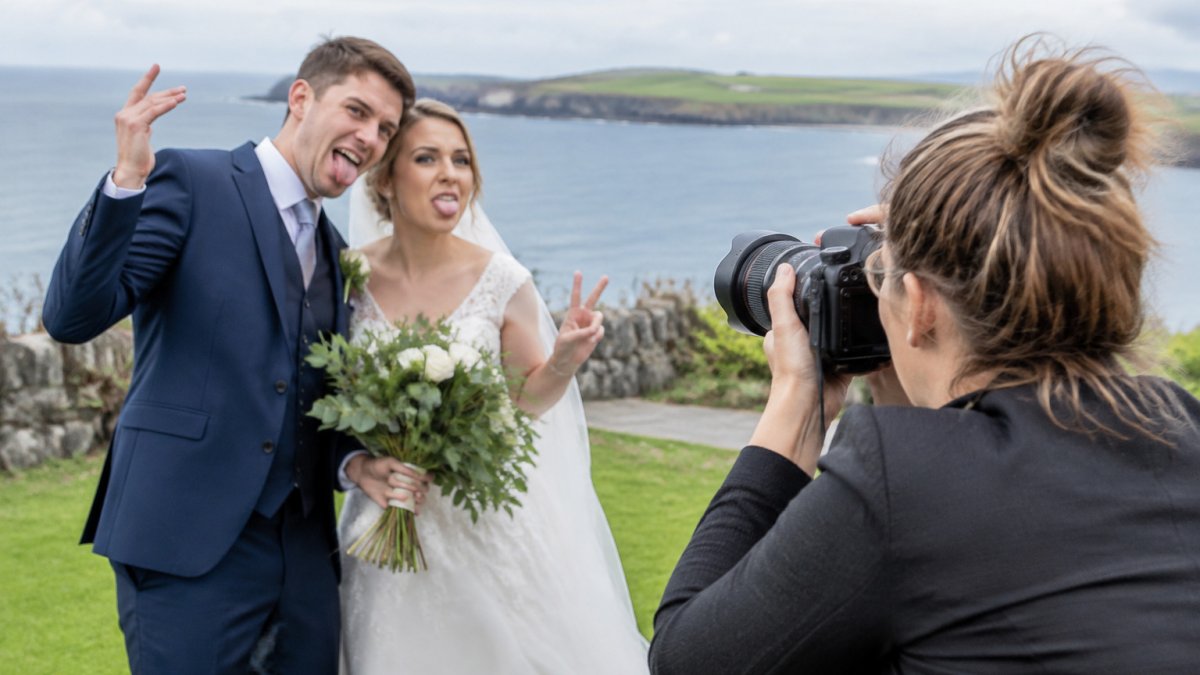
If you feel shy in front of a camera, you are not unusual. Most couples do at first. The fix is movement and conversation, not instructions.
Try these on the day:
- Walk together and talk. We photograph from a distance.
- Hold hands and look at each other, not at the lens.
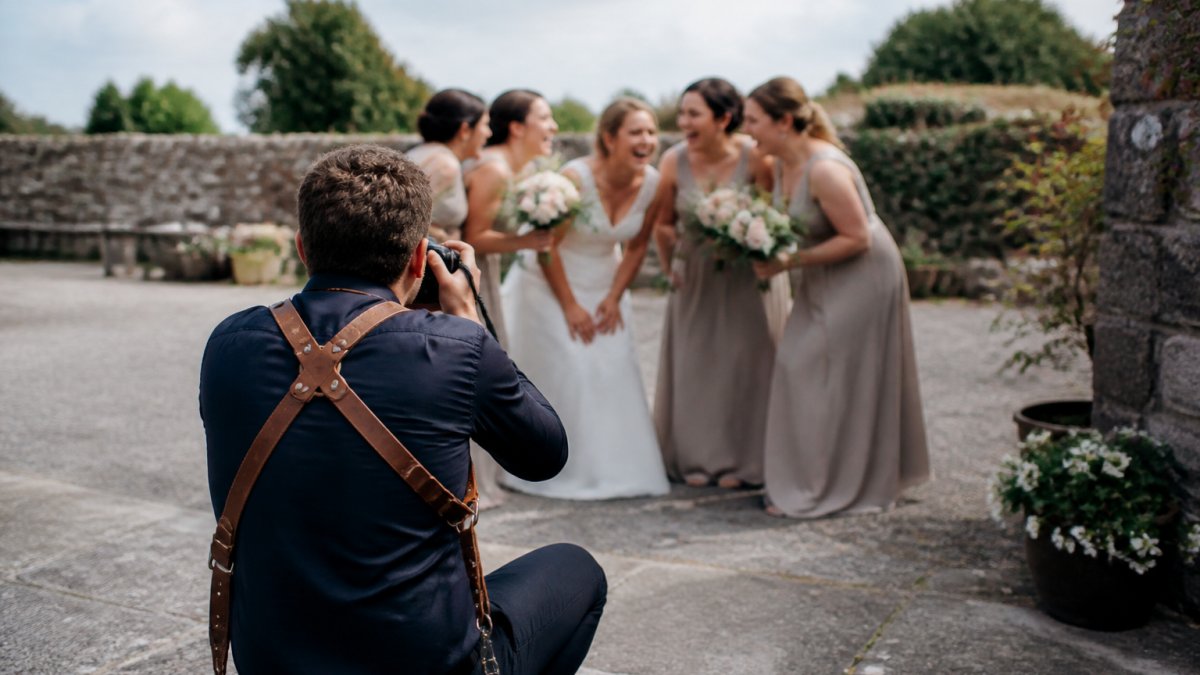
- Whisper something funny. Real laughter beats a posed smile.
What most guides miss is that the best candid moments happen between the posed ones.
You can see the style in our wedding portrait photography and read how we approach candid wedding photography.
Plan a Contingency for Weather, Delays and Low Light
Rain is the most common wedding-day surprise, and it changes nothing if you plan for it. An indoor backup location helps a shower cost you minutes rather than photos. But a list of risks is not a plan. What follows is a decision-ready contingency plan, the version competitors leave out.
Weather: Decide the Trigger, Not Just the Backup
Identify one indoor location with good window light, plus an umbrella and a covered doorway for quick outdoor shots. Then agree a trigger with your photographer: for example, if it is raining at the end of the ceremony, we move straight to the indoor location rather than waiting fifteen minutes to see if it clears. Waiting is what costs you portrait time.
Delays: Pre-Agree the Cut Order
If the ceremony runs late, cut portrait time first, never the family groupings. Those are the hardest to recreate. Write the cut order down, extra couple portraits, then wedding-party groupings, then extended family combinations, and give it to your timeline keeper so the decision is made before anyone is tired.
Low Light: Plan Around the Light, Not the Clock
Winter weddings and late ceremonies need extra time for portraits. Golden hour and blue hour pass quickly, so we plan around them rather than hoping the schedule allows. In practice that means checking the sunset time for your date and building the couple portraits into the last hour of daylight, even if that means moving them ahead of some family groupings.
Accessibility and Inclusive Planning
Tell us in advance about grandparents, wheelchair users or anyone who finds standing difficult. We plan shorter routes and seating, and we build in rest points. The same applies to family structure: if your family includes step-parents, estranged relatives or several households, give us the groupings in writing so nobody is asked to pose with someone they would rather not.
Guest Phones and Photo Permissions
Ask your celebrant to request phones away during the ceremony. Guests looking at screens date a photo instantly, and a raised phone in the aisle blocks the shot we were hired to take.
Agree before the day on who may share images and whether children can be photographed. We follow your wishes, and we will not publish anything you have asked us to keep private.
Brief Your Photographer and Book Your Date
The single best thing you can do is brief us properly, and do it early.
Tell us three things:
- Your priorities. Name the three shots you would regret missing.
- Your people. Share the family groupings and flag any sensitivities.
- Your venue. Mention the church, the reception venue and any smaller locations.
Tell us where your ceremony and reception are, and we will confirm the details in advance.
A common mistake is leaving the brief until the week of the wedding. Book the date first, then brief us once the timeline is set.
You can review our wedding videography and photography work and check availability for your date.
Frequently Asked Questions
How much time should you allow for wedding photos?
Build your wedding photography timeline around the ceremony first, then allow enough time for family, wedding-party and couple portraits. Add a buffer before the ceremony and before dinner so a late hair and makeup run or a delayed speech does not wipe out your portrait time. Confirm the final timings with your photographer and venue in advance.
What should be included in a wedding photography checklist?
A practical wedding photography checklist covers the details and the people. List the engagement ring, wedding rings, bouquet, wedding dress, shoes, veil, invitation suite and any personal details you want photographed. Then list every family grouping and wedding-party combination, with names, so nobody is missed. Add the photo locations you have agreed, the order of the day and any must-have candid moments. Share it with your photographer a week before the wedding and ask them to confirm it.
How can you feel more comfortable in front of the camera?
Natural wedding poses come from movement and conversation rather than stiff instructions. Walk together, hold hands, talk to each other and let the photographer work around you. Ask for a short engagement-style session before the wedding if you are nervous, so you know how the photographer directs people. On the day, keep the portrait session short, choose a location you like and tell your photographer what makes you self-conscious. Most couples relax within the first ten minutes once they are moving rather than standing still.
How do you get natural, candid wedding photos?
Candid moments happen when the photographer is present but not directing. Give your photographer time during getting-ready wedding photos, the drinks reception and the dancing rather than only the formal parts of the day. Tell guests to stay off their phones during key moments so faces are visible, and avoid calling people over for extra group shots during the reception. A photographer who knows the venue and the schedule can position themselves for real reactions instead of staged ones.
Your wedding morning will pass faster than you expect, and the photos are what remain. Philip Nevin brings 36 years of experience, dual photography and videography coverage, and deep local knowledge of Clare venues and churches. We work unposed and unhurried, so the day feels like yours and the photos look like it. Get started with Philip Nevin and book your date.