 How-to
7 Reasons to Hire Wedding Photographer and Videographer Together
Last Updated: November 10, 2026
Quick Summary
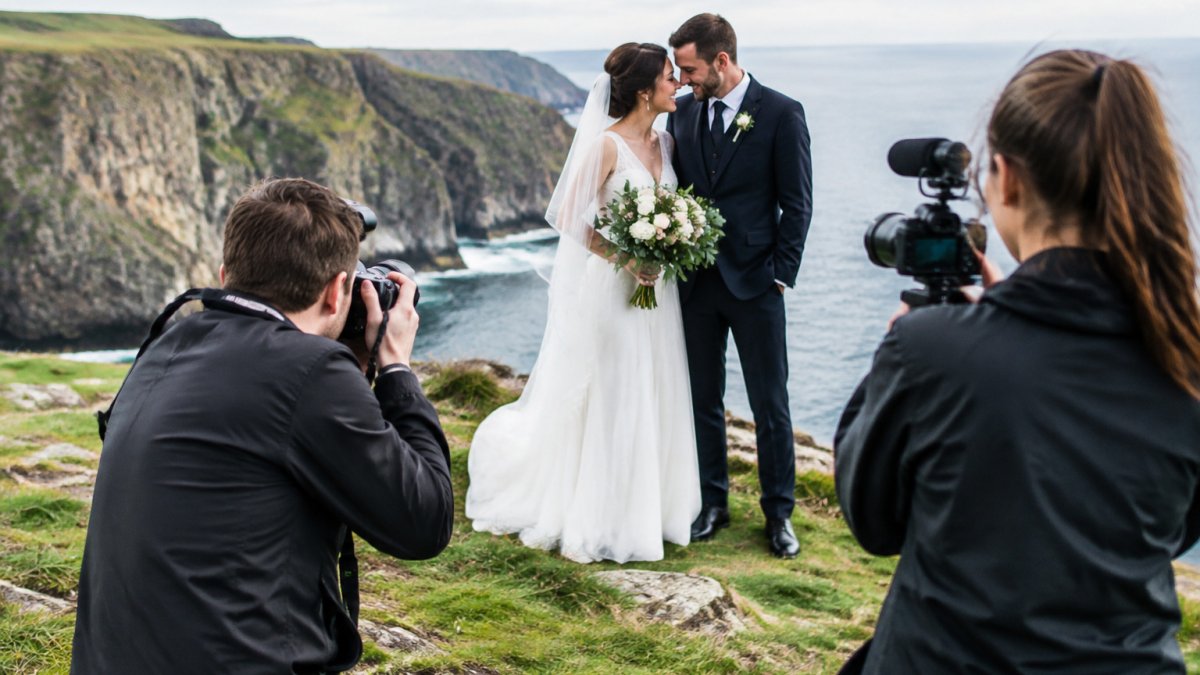
Hiring a wedding photographer and videographer together removes the biggest risk in wedding media: two people who have never met competing for the same moments and angles. A combined team plans camera positions, timings and shot priorities in advance, so photo and film never block each other.
- We have covered weddings as one team for 36 years, so positions are settled before the day.
- A combined package typically includes getting-ready coverage, ceremony from two angles, portraits and reception.
- Compare quotes on hours, team size, deliverables, turnaround, travel fees, overtime and backup terms.
- Build a written timeline: photographer at the front for reactions, videographer at the back for the wide film.
- Ask whether the pair have worked together before and who decides camera positions on the day.
Table of Contents
- Why One Coordinated Team Beats Two Strangers on Your Wedding Day
- What Wedding Photo and Video Packages Usually Include
- Separate Wedding Photographer and Videographer vs a Combined Team
- Building a Wedding Day Photography and Videography Timeline
- Questions to Ask Wedding Photographer and Videographer Before Booking
- Book Your Date With a Team That Knows Your Venue
- Frequently Asked Questions
Why One Coordinated Team Beats Two Strangers on Your Wedding Day
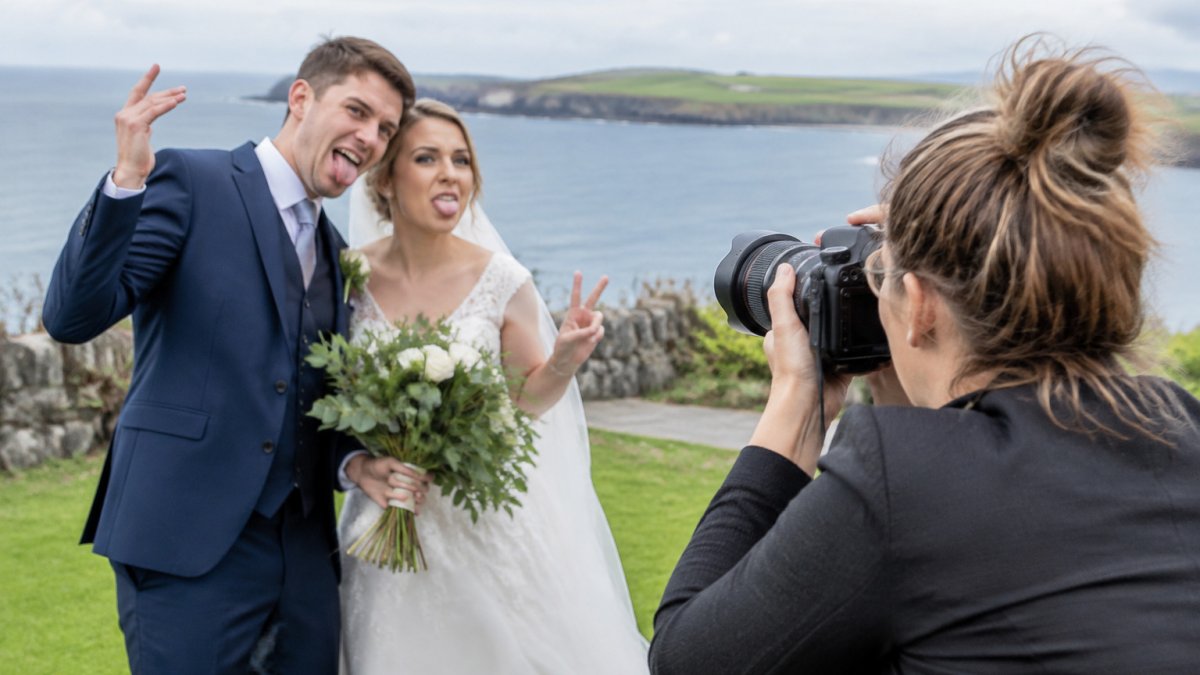
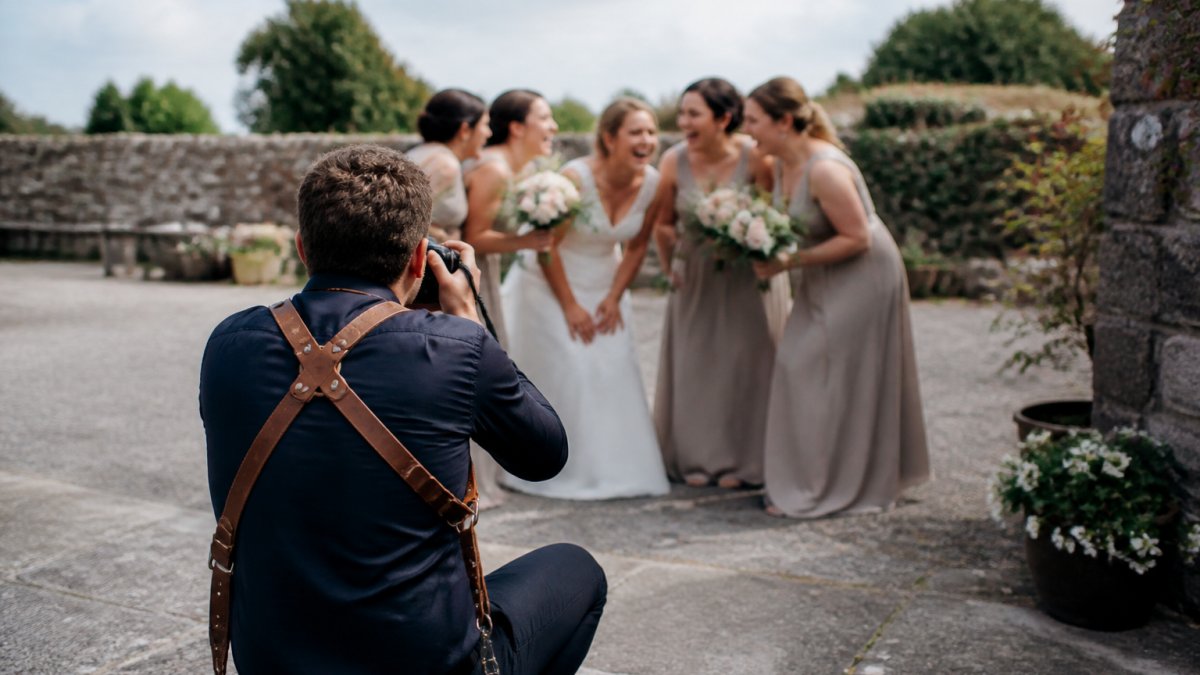
When you book a wedding photographer and videographer together, you remove the biggest risk in wedding media: two people who have never met trying to capture the same moments from the same angles. At Philip Nevin Wedding Video & Photography, we have spent 36 years covering weddings as one team, and that shared rhythm is the reason couples tell us they barely noticed us all day. See our wedding photography and videography in County Clare for a local team that handles both together.
Here is the core problem with hiring separately. A photographer and a videographer who do not know each other will both move toward the same shot at the same time.
Wedding photography and videography coordination is the practice of planning camera positions, timings, and shot priorities so the photo and video teams never compete for the same space. Done well, it is invisible.
What Wedding Photo and Video Packages Usually Include
Most wedding photo and video packages cover the same core ground. The differences sit in hours, deliverables, team size, and how the two formats are edited to work as a pair.
A typical combined package includes:
- Getting-ready coverage for both partners
- Full ceremony coverage, usually from two angles
- Family and group portraits after the ceremony
- Couple portraits at the venue or a nearby spot
- Reception coverage through to the first dance
Coverage hours vary. Some couples want eight hours, others want the full day from morning prep to late evening. Deliverable counts and editing turnaround also differ from one team to the next.
How to compare packages line by line
Rather than comparing headline prices, put two or three quotes side by side and check each of the following. This is the part most couples skip, and it is where packages that look similar turn out to be very different.
- Hours of coverage. Confirm the start and end times, not just the total. A package that begins at the ceremony misses getting-ready photographs and film, which are often the most relaxed footage of the day. Ask whether travel between venues counts against your hours.
- Team size. A single operator covering both photo and film is a different product from a dedicated photographer plus a dedicated videographer. Ask how many people will be present and whether an assistant or second shooter is included or charged extra.
- Editing and deliverables. Clarify how many edited photographs you receive, whether the full gallery is edited or only a selection, and whether the film is a highlight reel, a full-length edit, or both. Ask about the format and resolution of the files and whether you receive personal usage rights.
- Turnaround. Get a delivery window in writing. A common pattern is several weeks for photographs and a longer period for the film, but confirm the dates rather than assuming.
- Travel fees. Ask what radius is included and what is charged beyond it. If your ceremony and reception are in different locations, confirm whether the journey between them is covered.
- Overtime. Confirm the hourly rate if the day runs long, and whether it is charged in fixed blocks. Speeches and dancing often push past the agreed finish.
Pricing depends on coverage hours, travel, and the deliverables you choose. You can see the full range of what we offer on our wedding photography and videography services page.
Watch out: a quote that looks cheaper may exclude overtime, travel, or a second operator, so compare the total cost of the coverage you actually need rather than the deposit figure.
Separate Wedding Photographer and Videographer vs a Combined Team
Hiring a separate wedding photographer and videographer means two independent bookings, two contracts, and two people who meet for the first time on the morning of your wedding.
That can work. Plenty of couples do it successfully.
A combined team removes that assumption. The photographer and videographer have worked together before.
The practical differences come down to four things:
- One point of contact. You deal with one team, not two.
- One shared plan. Timings and shot lists are agreed internally.
- No turf wars. Positions are settled before the day, not during it.
- Consistent style. Photo and film are edited to feel like the same wedding.
For a closer look at how a combined photo and video service works in practice, see our wedding videographer profile covering how we approach both formats together.
Building a Wedding Day Photography and Videography Timeline
A wedding day photography and videography timeline is a written schedule that tells both camera operators where to be, what to shoot, and when, from the first getting-ready shot to the last dance.
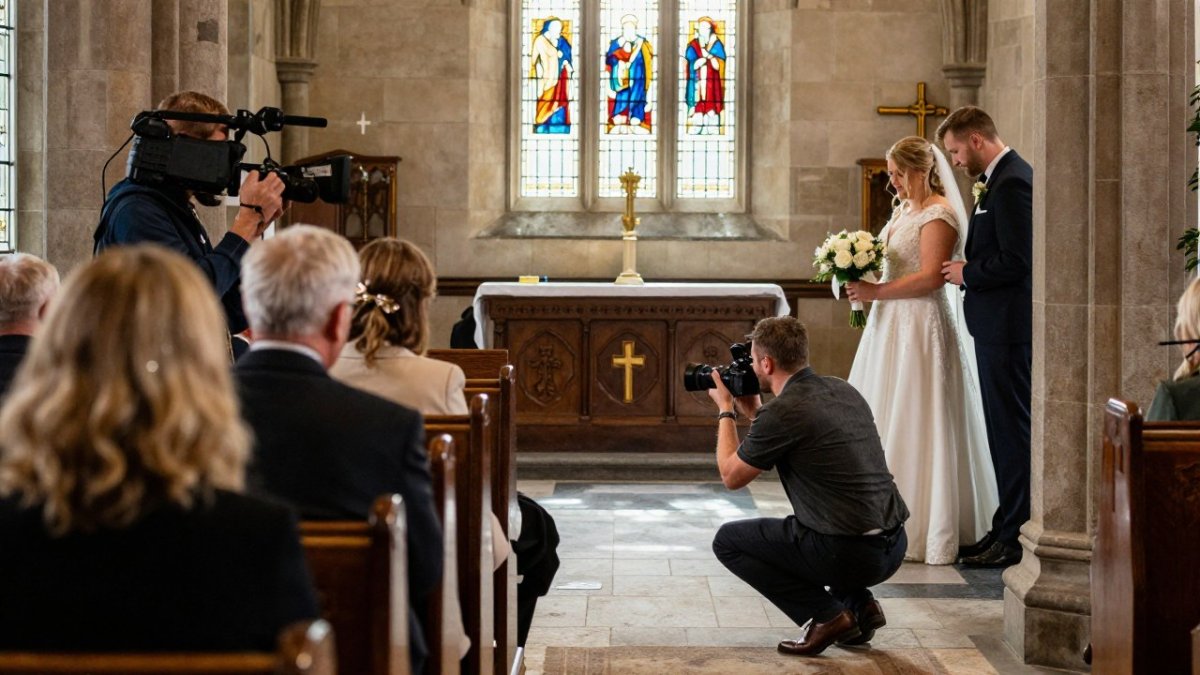
Here is the timeline structure we build with every couple:
- Getting ready: photographer with one partner, videographer with the other, then swap for detail shots
- Ceremony: photographer at the front for reactions, videographer at the back and side for the wide film
- Group portraits: one operator directs, the other captures candid moments between poses
- Couple portraits: photo first while light holds, film second for movement
- Reception: split coverage of guests, speeches, and dancing
Watch out: the most common timeline mistake is squeezing couple portraits into the last of the daylight after a long drinks reception. Build in a buffer and agree a backup indoor location.
Here is the timeline structure we build with every couple.
| Part of the day | Photographer | Videographer |
|---|---|---|
| Getting ready | With one partner, then swap for detail shots | With the other partner, then swap for detail shots |
| Ceremony | At the front for reactions | At the back and side for the wide film |
| Group portraits | One operator directs | The other captures candid moments between poses |
| Couple portraits | Photo first while light holds | Film second for movement |
| Reception | Split coverage of guests, speeches, and dancing | Split coverage of guests, speeches, and dancing |
Questions to Ask Wedding Photographer and Videographer Before Booking
The right questions to ask a wedding photographer and videographer are the ones that reveal how the two people actually work as a pair, not just how good their portfolios look. Most couples ask about style and price; far fewer ask the questions that expose whether a team will coordinate well under pressure.
Ask these before you sign anything:
- Have you worked together before, and how often?
- Who decides camera positions on the day, and when is that agreed?
- How do you divide the shot list so you are not both chasing the same moment?
- What happens if one of you is ill or a camera fails?
- How do you handle low light in our ceremony venue?
- How do you capture clean audio of the vows and speeches?
Questions that reveal team compatibility
The list above covers the basics. These follow-ups are the ones that separate a genuinely coordinated team from two people who happen to be booked for the same day.
- On positioning: "During the ceremony, where will each of you stand, and how do you avoid blocking each other or the guests?" A team that has worked together will answer with specific positions rather than general reassurance.
- On conflicting priorities: "If the light is fading and the couple portraits are running late, who leads and how do you decide?" This reveals whether there is an agreed hierarchy or an awkward negotiation on the day.
- On the shot list: "How do you share a shot list between photo and film so the same moments are not missed or duplicated?" Ask to see how a real shot list is divided.
- On audio: "How do you record vows and speeches, lapel microphones, a feed from the venue's sound system, or a standalone recorder?" Clean audio is one of the most common weak points in wedding film, and the answer shows whether it has been planned.
- On low light: "What is your approach in a dim ceremony space or a candlelit reception?" Ask whether they use fast lenses, additional lighting, or both, and whether the lighting would be intrusive.
- On backup: "If a camera fails mid-ceremony, what is the contingency?" A coordinated team can cover for each other; two strangers usually cannot.
Once you have your answers, you can check availability for your date and get the conversation moving.
Book Your Date With a Team That Knows Your Venue
Venue knowledge is where a local team pulls ahead.
We have photographed and filmed weddings across the county for 36 years, in hotels and churches.
You can browse the wedding venues we know well to picture coverage at your own setting.
The difference between a stressed wedding day and a relaxed one often comes down to who is holding the cameras.
Frequently Asked Questions
Should I hire a separate wedding photographer and videographer?
It depends on how much coordination you want to manage. Separate professionals can work well, but they arrive without shared habits, so someone has to brief both on the shot list, camera positions and timings. A combined team can agree on how each person moves and where the other will stand before the day. If you go separate, book them early, introduce them by email before the day and agree who leads on timing.
Is it cheaper to book wedding photography and videography together?
It can be, depending on how packages are structured, so ask for a written quote covering both services. Pricing still depends on coverage hours, venue distance, number of locations and deliverable length, so ask for a written quote covering both services. Compare the total figure, not the headline rate, and check what happens if you later add extra hours.
Can one person do both wedding photography and videography?
One person can hold a camera and a second body on a tripod, but not at the same time. Stills need split-second reactions; video needs steady framing and clean audio. A solo operator ends up choosing one over the other at the exact moment something happens. A two-person team covers the ceremony, the reactions in the pews and the couple portraits without either job being dropped.
How do a wedding photographer and videographer coordinate on the day?
A good coordinated team agrees a shared shot list and a rough order of events beforehand, then splits positions so each operator keeps out of the other's sightlines.